Apple Enters the Smart Home Market With the $299 HomeView
Apple has announced the HomeView, a seven-inch screen-topped hub with facial recognition that controls connected home accessories. It is the second major new device under CEO John Ternus.
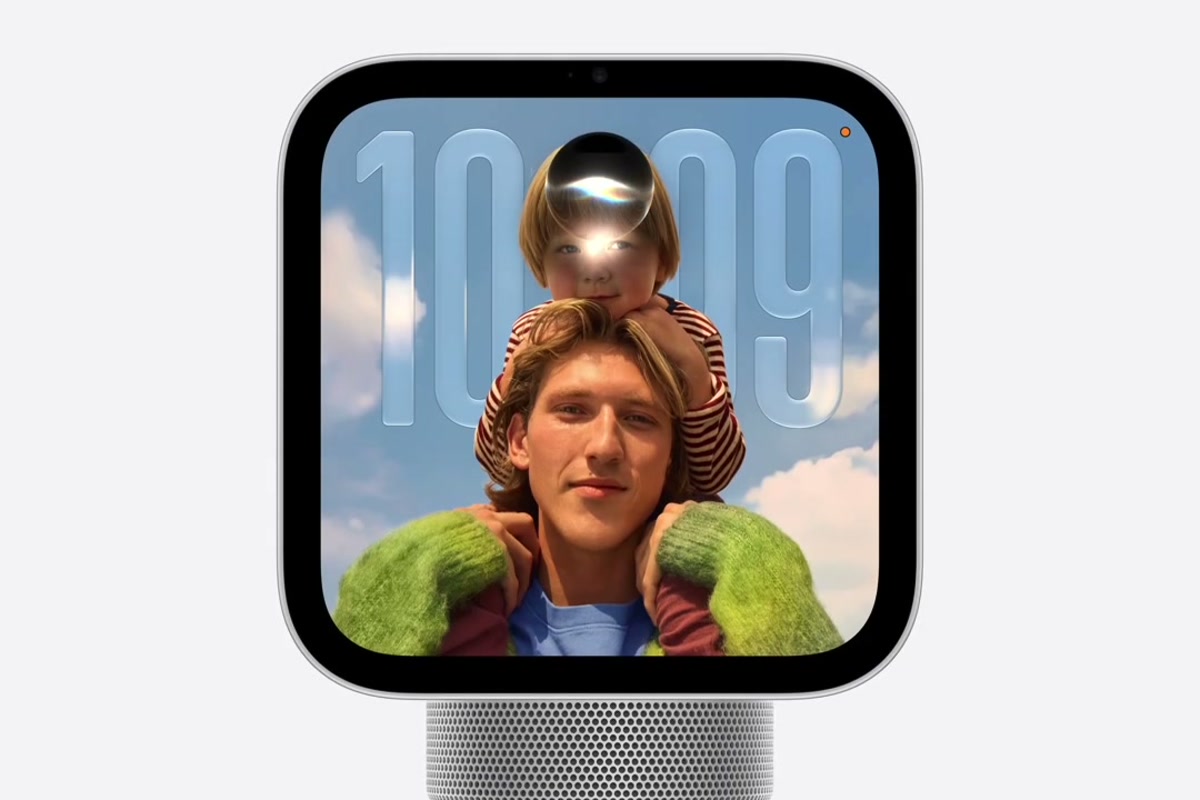
Apple has entered the smart home market with its own hardware, announcing the HomeView on Tuesday. The device is a screen-topped hub that sits in the home and controls connected accessories, and it marks the second major new product launched under chief executive John Ternus, who replaced Tim Cook in September.
The HomeView pairs a seven-inch display with a speaker base and works with Siri. Apple has priced it at $299, with pre-orders opening Tuesday ahead of a November 13 launch.
What Apple says it does
Greg Joswiak, Apple's senior vice president of worldwide marketing, described the HomeView as a shared device that nonetheless personalises itself for each person who uses it.
"Apple HomeView is designed to be shared by everyone in the home yet feel completely personal to each user," Joswiak said in a statement. He said the product "recognizes your face to shift from a household screen to your own experience, fills the room with incredible sound, keeps you connected to the people who matter most with FaceTime, and makes it easy to control your smart home."
Facial recognition is the distinguishing feature. Rather than one shared account for the whole household, the hub identifies who is standing in front of it and shifts to that person's content, messages and controls. Reporting ahead of the launch had indicated the device would use an A18 chip, giving it enough local processing to handle more advanced Siri requests without depending on cloud servers.
A new category for the company
Apple has supported the smart home for years through HomeKit, a standard third-party manufacturers could adopt to make their accessories work more smoothly with the iPhone. The HomeView is different in kind: rather than defining the rules for other companies' hardware, Apple is now selling a device that competes in the same space.
The move puts Apple in a market long dominated by Amazon's Echo line and Google's Nest displays, both of which pair a screen and a speaker with a voice assistant. Analysts have framed the HomeView as Apple's most direct attempt yet to place itself at the centre of the connected home.
Business Insider noted a second-order effect. Because Apple's strength lies in how tightly its hardware and software interlock, a customer who owns a HomeView and builds their home around it faces a higher cost of switching to a rival platform later.
The second launch of the Ternus era
The HomeView follows the iPhone Duo, Apple's first foldable phone, which Ternus unveiled at the company's September event — his first major hardware launch as chief executive. The iPhone Duo opens for pre-orders later this week.
Ternus, previously Apple's head of hardware engineering, took over from Cook on September 1. Reporting since has indicated he has taken an unusually direct hand in product design, with Bloomberg's Mark Gurman reporting that no outside search for a chief design officer is underway. Tim Cook, now executive chairman, told The Independent that he is "not meddling" with his successor.
The HomeView announcement was trailed by a short post from Ternus on X on Tuesday reading "Welcome HomeView," accompanied by a promotional video. The post drew substantial engagement within hours.
What it runs
Reporting ahead of the launch indicated the HomeView would not ship with an App Store in the way an iPad or Apple Watch does. Instead, it runs a more constrained system focused on home controls, media playback, FaceTime and glanceable information, with a home screen and widgets that draw on design language from iOS, tvOS and watchOS.
Third-party software support is expected to come largely through Matter and Thread, the cross-manufacturer standards for smart home accessories, plus controls projected from a nearby iPhone.
Reports have also suggested Apple is using the HomeView as the centre of a broader home hardware push, with refreshed versions of the HomePod mini and Apple TV 4K expected to accompany it.
Sources
Business Insider, "Apple's first smart home device, the HomeView, is here" (October 13, 2026); John Ternus on X; Bloomberg; PCMag; The Verge; MacRumors.
 Jurassic Park River Adventure Slides to December 16 as Universal Orlando Extends Its Longest-Ever Refurbishment
Entertainment, 1 min read
Jurassic Park River Adventure Slides to December 16 as Universal Orlando Extends Its Longest-Ever Refurbishment
Entertainment, 1 min read
 Miraculous: Tales of Ladybug & Cat Noir Getting Its First Live-Action Series
Entertainment, 1 min read
Miraculous: Tales of Ladybug & Cat Noir Getting Its First Live-Action Series
Entertainment, 1 min read
 Big Shot Pictures Lands Film Rights to CookieRun Franchise for a 2029 Release
Entertainment, 1 min read
Big Shot Pictures Lands Film Rights to CookieRun Franchise for a 2029 Release
Entertainment, 1 min read